Pages

My Viewer

Showing posts with label Siliman University. Show all posts

Friday, August 10, 2012

Dumaguete2 @ Siliman University

To most Americans in the late 1800, Dumaguete was a name their tongue was still to master. It was unfamiliar to them. Even the Philippines, which at that time was still recovering from the onslaught of the Spanish-American War, was not on the immediate list for a Presbyterian mission. But it took the vision and commitment of a man to turn this around.

The late Dr. Arthur Carson, third Silliman president, wrote in his book how a man's strong resolve to help shape up Philippine education paved the way for the establishment of Silliman University. The man was Dr. Horace B. Silliman, a retired businessman of the town of Cohoes in New York State.

In 1899, Dr. Silliman appeared at the office of the Presbyterian Board of Foreign Missions with the conviction that the Filipino people would need a new kind of education. To support this, he contributed the initial sum of $10,000 toward the founding of an industrial school. Legend has it that the Board Secretary was surprised and explained that the Board had only begun to consider a mission in the Philippine islands. At that time, news was fresh on the naval victory of Admiral Dewey over the Spanish fleet in Manila Bay. The Board Secretary thought it would be too early for a school.

But the visitor persisted. Something had caught his imagination about these islands, and the people whom he had never seen and whom he would never meet.

Dr. Silliman had long been an active supporter of schools and colleges. Among such institutions was Hampton Institute of Virginia, and his proposal to the Presbyterian Board was for an industrial school in the Philippines on the Hampton model.

The mission in the Philippines started with Dr. David Sutherland Hibbard and wife, Laura, commissioned to head it. Three areas were considered: Cebu, Zamboanga and Iloilo. While in Cebu, someone suggested for him to make a side trip to Dumaguete. Sailing from Cebu on a Saturday night, he came out early on deck the next morning and saw 'the unsurpassed drama of a Dumaguete morning from the sea.'

It was told that the friendly attitude of the people and the caliber of the local officials attracted him to Dumaguete, a 'place of health and beauty.'

On August 28, 1901, Silliman Institute was established. As Dr. Hibbard described the modest beginning of Silliman half a century later:

'There were fifteen boys that first morning. The equipment consisted of four desks about ten feet long, two tables and two chairs, a few McGuffey's Readers, a few geographies, arithmetics and ninth-grade grammars. I was President; Mrs. Hibbard was the faculty.'

Enrollment in the university grew gradually to include students from Asian countries. 1912 marked the admission into the university of the first female student, Pura Blanco.


Tuesday, August 07, 2012

Dumaguete Negros Oriental

Dumaguete City, Negros Oriental


The Negros Island is one among a total of 7,107 islands comprising the Philippine Archipelago. It was discovered by the Spanish explorers during the expedition of Señor Miguel Lopez de Legaspi in the year 1565. Abundant in natural resources, Negros is home to some 3.7 million peace loving Filipinos who thrive mainly on agriculture and aquaculture as their source of livelihood. In the year 1890, the island was divided into two distinctive provinces, namely Negros Occidental and Negros Oriental.

The province of Negros Oriental occupies the Southeast portion, holding in itself 5 key cities and 20 municipalities, most of which line the coastal shores facing east to the Tañon Strait and south to the Sulu Sea. Because of its ideal location and tropical climate, many have been drawn to the serene beaches and have been known to find themselves building their nests along the Negros shorelines.

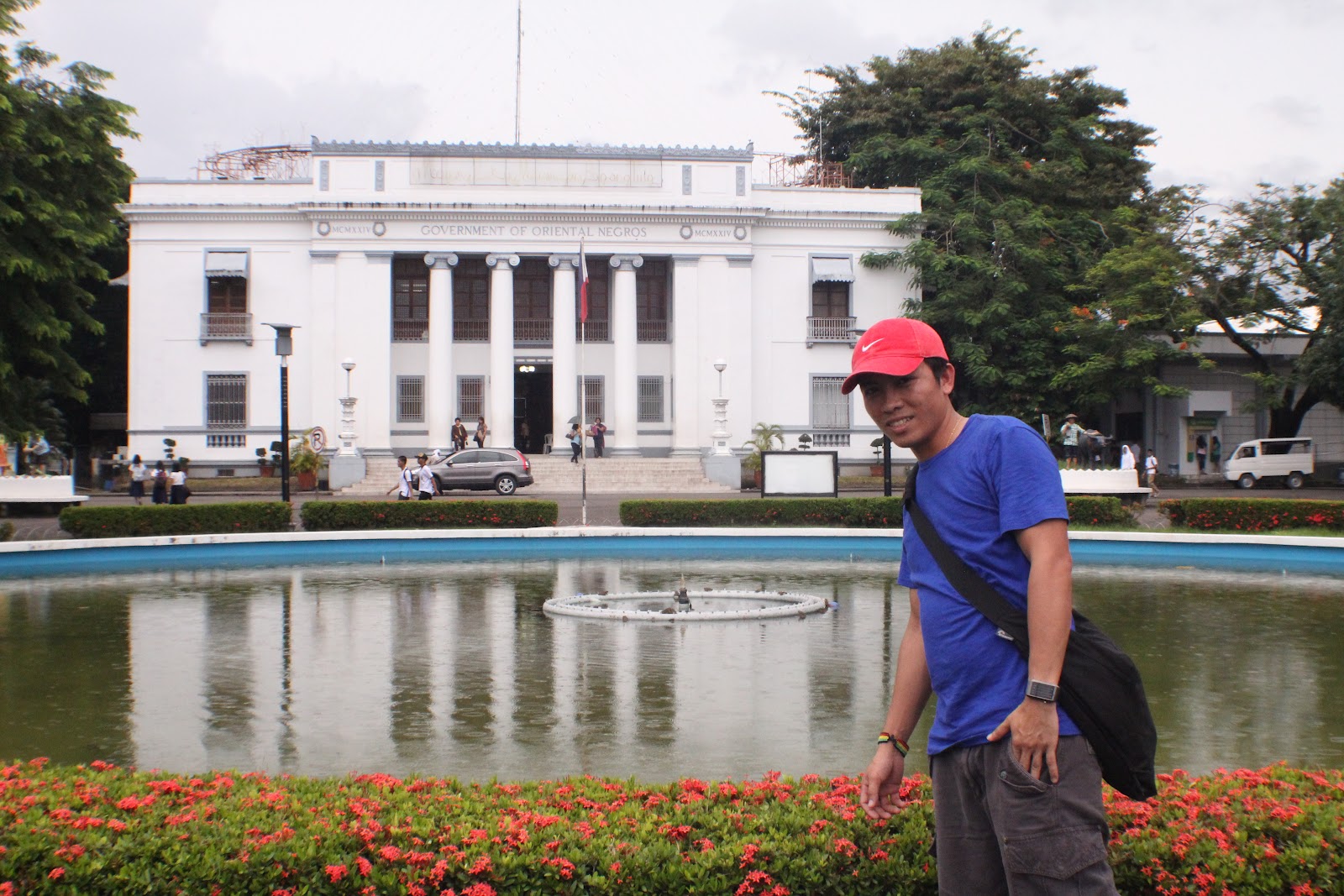
The capital of Negros Oriental is Dumaguete City, the seat of government and the province’s economic hub. Though relatively small with a total land area of only 34.26 square kilometers, it is the most populated area in the province. It boasts of an airport and several piers which make Dumaguete City a point of destination for students, businessmen, travelers and tourists alike.

A vast majority of the Dumagueteños are literate and can communicate in English, Tagalog and Ilonggo besides their native Cebuano dialect.
The City of Gentle People

Despite the inevitable changes that the modern civilization has brought about, Dumaguete City remains to be rooted deeply to its historical past. Nearly every significant event that took place in its earliest days is commemorated each year with meticulous attention to details, giving the people an occasion to celebrate and to relive a rich and interesting culture that has shaped their city.
Dumaguete City

Dumaguete got its name from the Visayan word daguit which means to snatch. It has been said that in the olden days, pirates came by the island to take away the pretty native maidens.

At the heart of Dumaguete City stands Silliman University, established in 1901 by American philanthropist Dr. Horace B. Silliman. Much of its old wooden and stone structures still proudly stand including what is now the Silliman Museum, whose rooms were once used by the Japanese forces during World War II.

The City of Gentle People, as this city is aptly labeled, Dumaguete is dotted with cherished remembrances from a bygone era. Old churches and cathedrals, antique houses and memorabilia, the famous Bell Tower, and the occasional kalesa (horse-drawn carriage) plying the city streets add up to the quaint, old world charm that the city exudes – with its friendly and hospitable people who value their simple and laidback lifestyles.